Acoustic Panels: Style Meets Soundproofing in Decor
For years, soundproofing solutions remained concealed behind drywall or covered with plain fabric. Today, designers integrate acoustic panels into the overall aesthetic, combining texture, color, and form with functional performance. These panels extend beyond recording studios and offices into living rooms, open kitchens, and bedrooms, where individuals seek a quieter and more comfortable auditory environment.
This evolution stems from increased recognition that acoustics influence the emotional quality of spaces. A visually appealing room may still prove fatiguing if sound reverberates off rigid surfaces. Contemporary acoustic panels address this issue by dampening echoes while introducing warmth and visual interest.
Why Sound Control Matters at Home
Open floor plans, high ceilings, and durable finishes such as concrete and glass generate unwanted echoes. Voices, music, or appliance sounds that reflect repeatedly can transform serene interiors into restless ones. Interior designer Lila Trent observes, "We started treating sound as part of wellness. It is about comfort as much as aesthetics."
Acoustic panels enhance sound absorption to minimize these reflections. The outcome yields a balanced setting where clear conversations and peaceful silence harmonize. Families experience more relaxed dining spaces, and remote workers benefit from improved concentration and audio quality during virtual meetings.
Design Meets Function
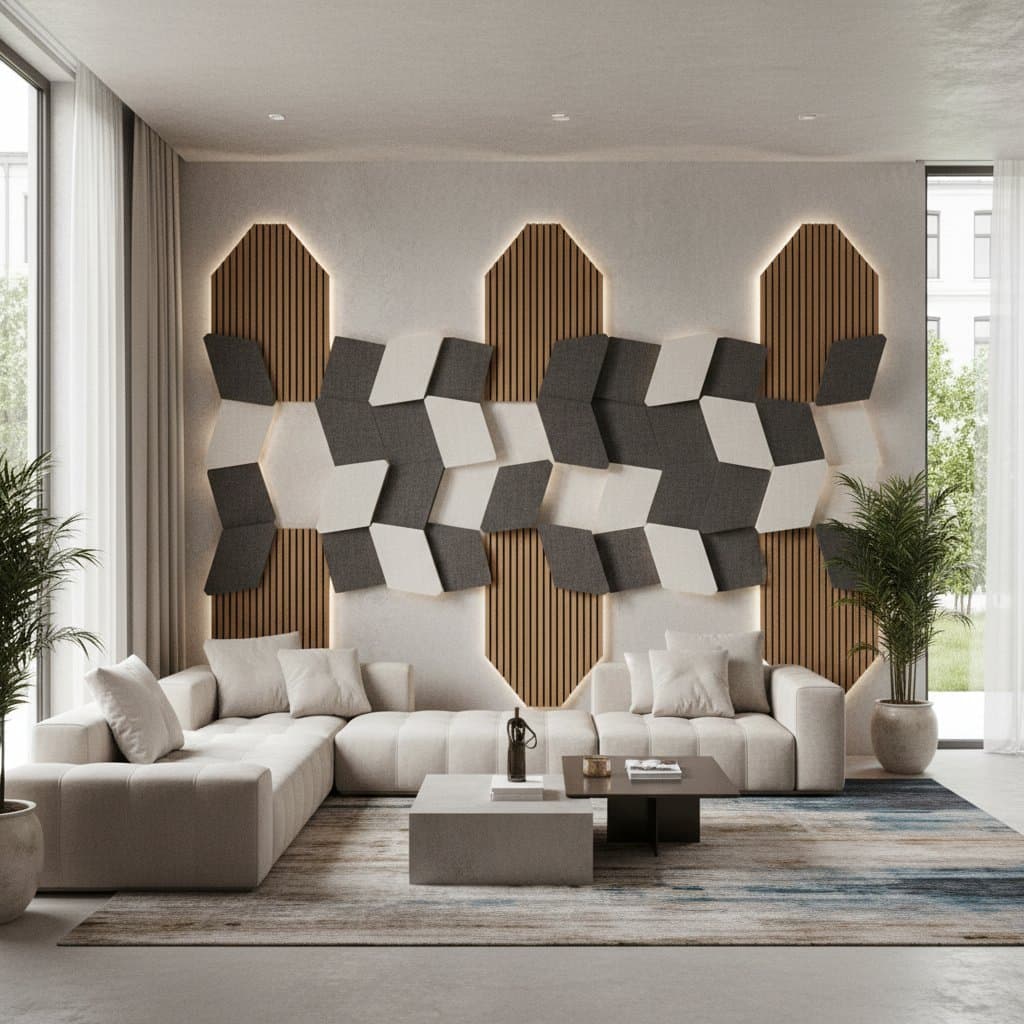
The design field has abandoned the bulky, functional appearance of traditional acoustic treatments. Current options feature sculptural shapes, luxurious textiles, and adaptable modular arrangements that function like artwork. Professionals position them as key components, using repeated patterns to create grids or blending hues for gentle color transitions.
Fabric-covered panels often utilize wool blends or recycled felt for durability and style. Wood slat designs add rhythmic lines and dynamic shadows. Innovative versions include integrated LED lighting or magnetic attachments for effortless reconfiguration. A thoughtfully arranged group can serve as a focal point above a sofa or as a backdrop for a bed.
Architect Daniel Ruiz states, "We no longer hide acoustic panels. We celebrate them as part of the design language." Careful selection elevates both the visual appeal and auditory performance of any room.
At a Glance
Who benefits: Homeowners pursuing quieter and more inviting living areas
Where used: Living rooms, home offices, bedrooms, and open-plan kitchens
Typical materials: Felt, wool, wood, cork, and composite foam
Design teams experimenting with: Modular arrays, geometric shapes, layered textures
Ideal square footage coverage: Approximately 15 to 25 percent of wall or ceiling surfaces with hard finishes to achieve optimal absorption
Before: The Echo Problem
Prior to acoustic interventions, numerous residences grappled with persistent echoes and imbalanced audio. Rigid elements like tile flooring, glass dividers, and sparse furnishings intensified noise levels. Discussions turned strident, and sounds traveled excessively between areas.
Homeowner Marcus Lee shares, "We loved our open kitchen, but every meal sounded like a cafeteria. We could not hear the television without turning it up too loud." Such challenges arise frequently in environments lacking sufficient soft elements like rugs or drapes to capture sound.
Untreated, sound waves continue to rebound, producing what specialists term flutter echo. Prolonged exposure to this phenomenon can render even thoughtfully designed spaces fatiguing.
After: A Quieter Transformation
Incorporating acoustic panels alters both the auditory experience and the visual composition. In Marcus Lee's residence, the design team affixed twelve 24-by-24-inch (61-by-61-centimeter) felt panels in a grid pattern above the dining table. The subtle gray tone complemented the concrete flooring, preserving visual unity. Echoes dissipated almost immediately.
Designer April Torres emphasizes, "The placement matters as much as the product. We focus on where reflections occur, such as opposite large windows or near hard ceilings." She highlights ceilings as prime locations for treatment, given that sound tends to ascend and rebound downward.
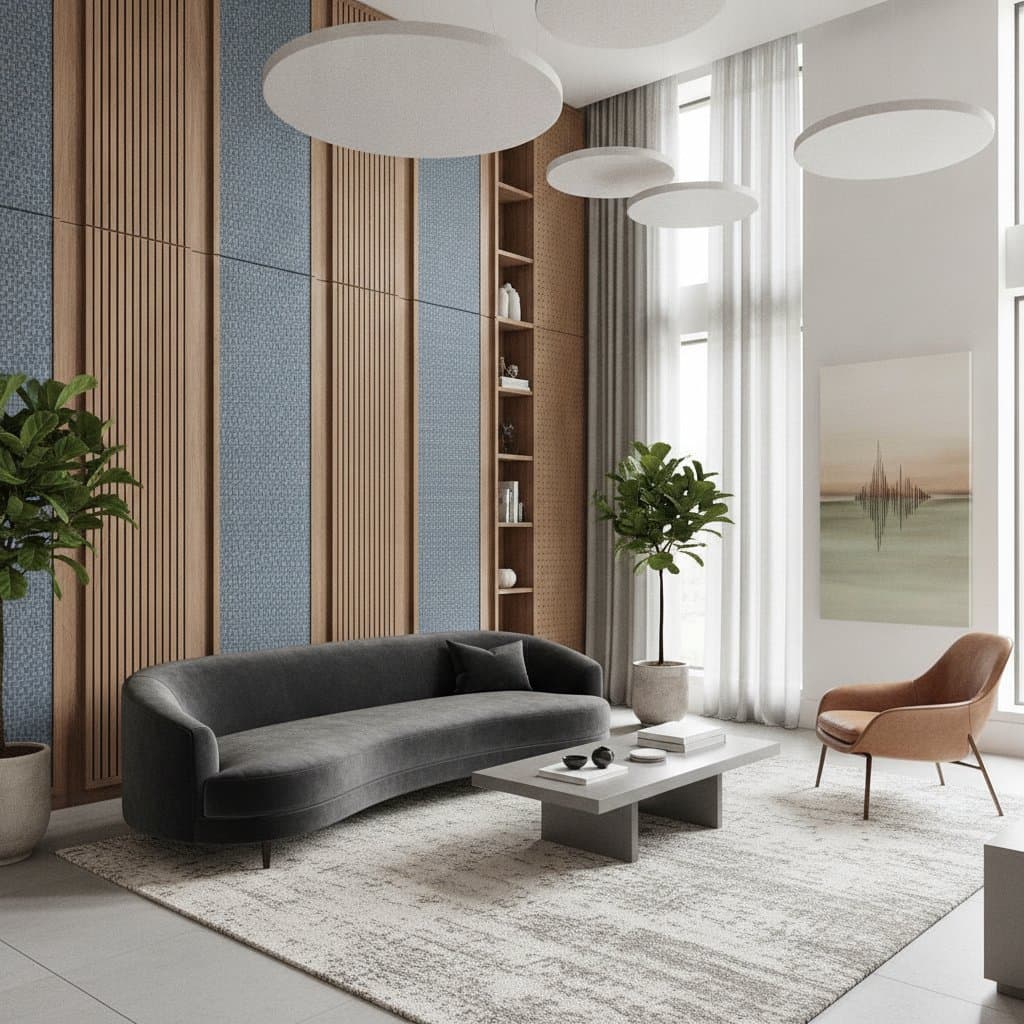
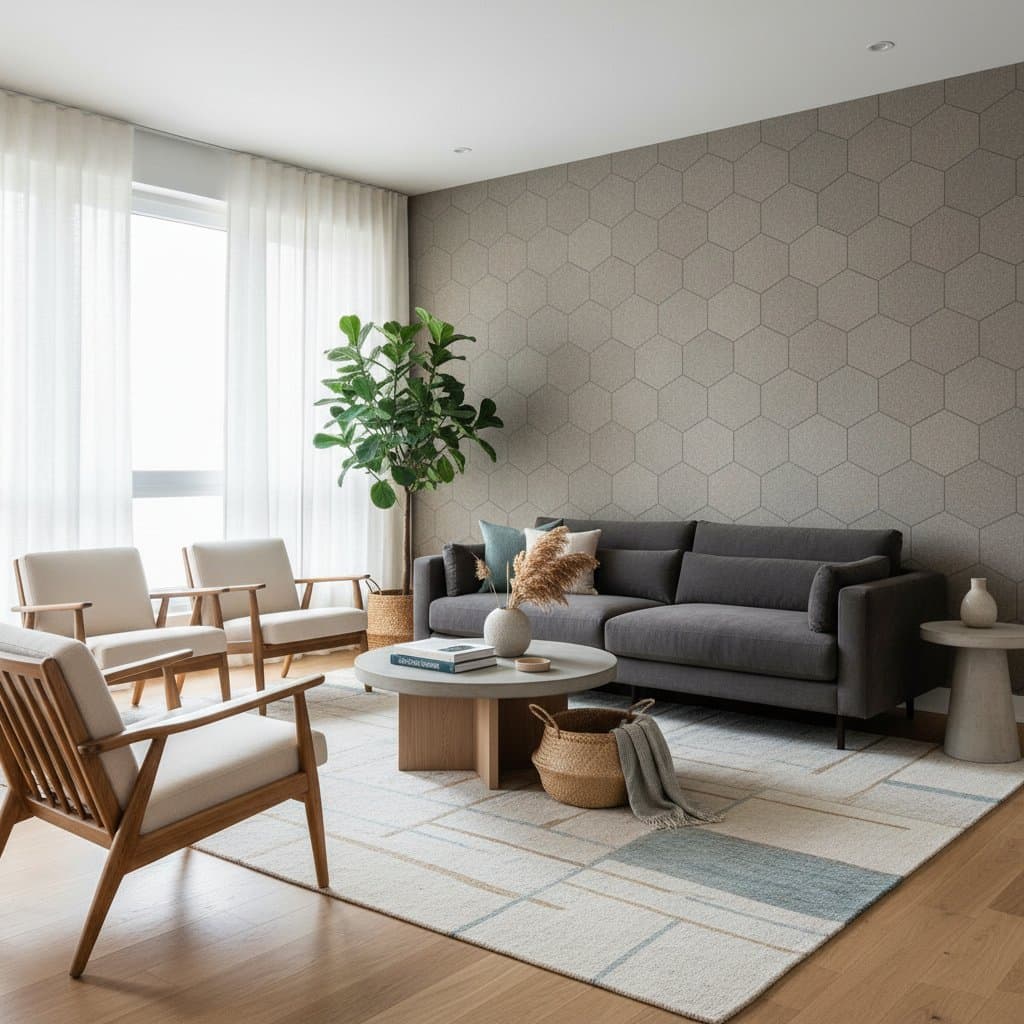
In additional installations, panels emerge as prominent features. Vertical wood slats with acoustic underlayers can outline a media wall, while hexagonal felt tiles may encircle corners or staircases. Variations in color and texture introduce movement without dominating the surroundings.
Design Details
- Materials: Wool felt, recycled polyester fiber, cork composite, perforated wood veneer
- Panel thickness: Generally 1 to 2 inches (2.5 to 5 centimeters) to ensure robust sound absorption
- Mounting systems: Adhesive strips, concealed clips, or magnetic tracks that allow for simple adjustments
- Visual effects: Geometric repetition, tonal layering, or sculptural relief for added dimension
- Lighting integration: Certain systems incorporate LED edges or recessed lights to merge illumination with sound control
- Sustainability: Numerous manufacturers employ recycled or biodegradable components, attracting environmentally aware residents
Style Options for Every Room
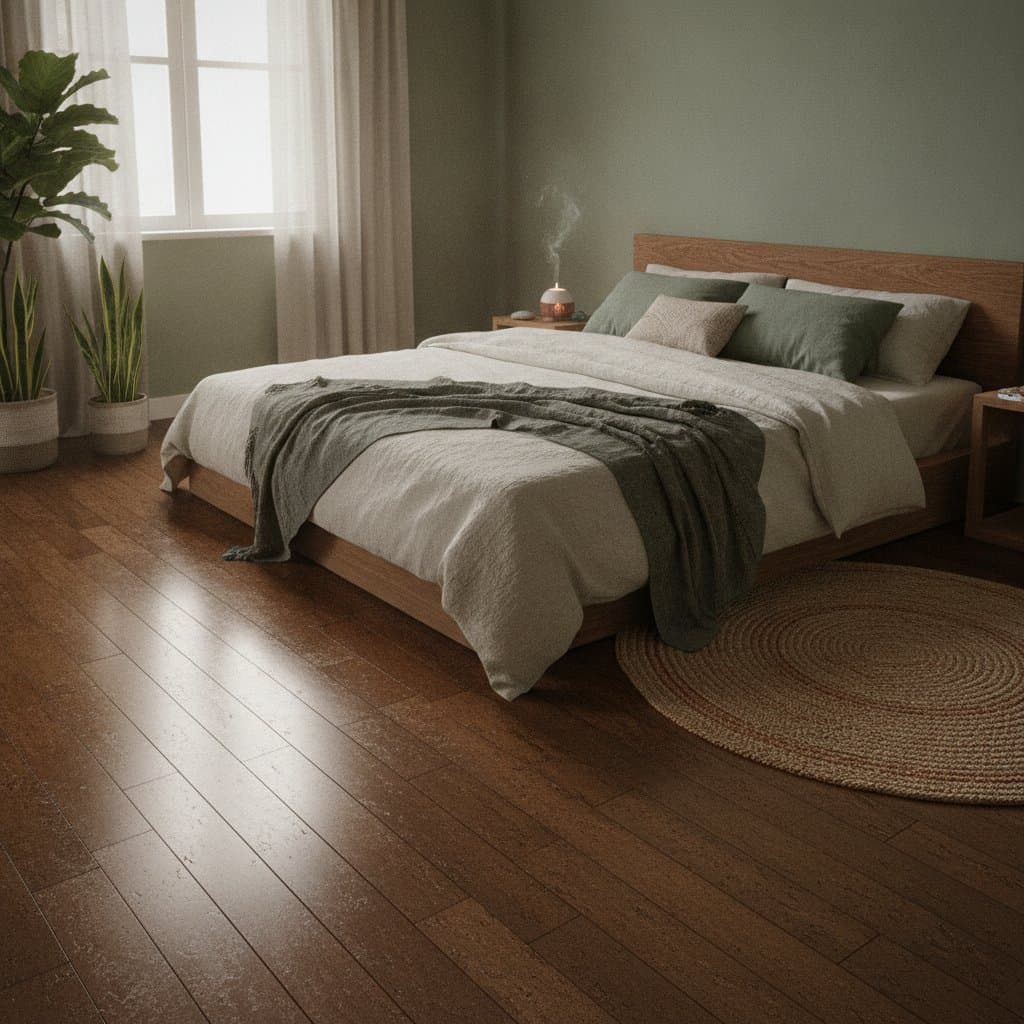
Bedrooms benefit from upholstered headboard panels that span the wall, offering sound dampening alongside a plush aesthetic. In living rooms, expansive felt panels in soft shades mitigate noise while delineating seating zones. Home offices utilize compact panels positioned behind desks to enhance speech intelligibility on video conferences.
Minimalist schemes pair neutral panels with matching wall tones for seamless integration. Vibrant approaches employ patterned or segmented color panels to inject vitality. Designers craft three-dimensional displays with panels of differing depths, producing subtle shadows that evolve throughout the day.
These diverse finishes enable acoustic panels to suit various aesthetics, ranging from Scandinavian minimalism to mid-century coziness or industrial ruggedness.
Smart Placement Strategies
Sound dynamics vary by room geometry and surface types. To maximize efficacy, professionals adhere to these principles:
- Identify reflection points. Position panels across from primary sound origins, including speakers or expansive windows.
- Balance coverage. Address at least two adjacent surfaces, like one wall and the ceiling, to avoid lopsided absorption.
- Mind the height. Install panels at ear height or higher to target conversational echoes effectively.
- Combine treatments. Integrate wall panels with floor rugs or fabric drapes for comprehensive sound management.
- Consider symmetry. Uniform spacing promotes acoustic equilibrium and visual coherence.
Such tactics guarantee that panels rectify sound challenges while upholding design integrity.
The Designer’s Perspective
Professionals view acoustic solutions as integral to holistic comfort. Interior stylist Renee Hart asserts, "Good design touches every sense. When a room sounds better, it instantly feels more inviting." Her work frequently employs panels to delineate areas in expansive layouts, such as isolating a reading nook from a dining zone.
Photographer James O’Neil, who captures interior designs, observes that panels enhance photographic outcomes. "They absorb glare and soften lighting. The space looks calmer on camera, which mirrors how it feels in person."
Steps to Integrate Acoustic Panels
Homeowners interested in acoustic panels should begin with an auditory assessment. Position yourself in the room's center and produce a clap or speak at conversational volume. Note any prolonged reverberation and pinpoint the reflecting surfaces. Measure these areas to determine required coverage.
Then, choose between subtle or statement-making designs. Brands commonly provide fabric swatches and digital mockups to preview integration. Installation proves accessible, often involving adhesives or basic hardware, suitable for a single-day effort.
Embracing acoustic panels delivers a refined enhancement. Dialogues gain clarity, music acquires richness, and tranquil intervals deepen. Design and acoustics unite seamlessly, elevating everyday living.