Gen Z Revives Grandmillennial Bedroom Charm
When individuals in their twenties begin to install fringed lampshades and collect embroidered pillowcases, a notable shift emerges in interior design trends. The grandmillennial aesthetic, previously linked to older generations and antique shops, now attracts Gen Z enthusiasts. This generation reinterprets these elements with contemporary awareness. The outcome combines nostalgia and freshness, layering without excess, and personalization amid widespread uniformity.
At a Glance
- Style Focus: Grandmillennial bedroom decor
- Key Elements: Florals, ruffles, antiques, soft lighting
- Mood: Cozy, nostalgic, and quietly confident
- Budget Range: Thrift-friendly to heirloom-level
This evolution stems from a pursuit of authenticity and comfort. Minimalism once prevailed, yet Gen Z now prioritizes warmth, sentiment, and narrative. A vintage lamp acquired at a local estate sale provides a sense of grounding that mass-produced alternatives lack. A floral quilt evokes familial ties, cherished memories, and artisanal skill.
The Era of Minimalism
For several years, bedrooms emphasized simplicity. White walls, neutral bedding, and clean Scandinavian lines filled social media feeds. Such designs offered tranquility, yet they often appeared impersonal. Many young homeowners and renters observed that their spaces mirrored those of others.
Bedrooms served practical purposes but lacked vitality. A solitary plant in one corner, a beige duvet, and a simple wooden side table characterized these rooms. Maintenance proved straightforward, and photography came easily, but the absence of texture and history rendered them sterile. As individuals spent more time indoors, this neutrality diminished in appeal. The desire for distinctive character intensified.
Embracing Character and Comfort
Grandmillennial style integrates traditional decor, vintage elements, and modern moderation. Imagine a chintz headboard adjacent to a mid-century lamp, or a ruffled bed skirt alongside a streamlined nightstand. The approach avoids exact replication of past interiors. Instead, it captures the essence of comfort while eliminating outdated density.
Gen Z adaptations appear airy. Designers blend patterns within a subdued color scheme. Quilts layer over linen sheets, embroidered shams add detail, and artwork conveys a sense of accumulation rather than deliberate arrangement. The emphasis falls on ambiance over flawlessness. Such rooms encourage relaxation, reading, and extended stays.
Essential Design Elements
1. Patterns That Convey Narrative
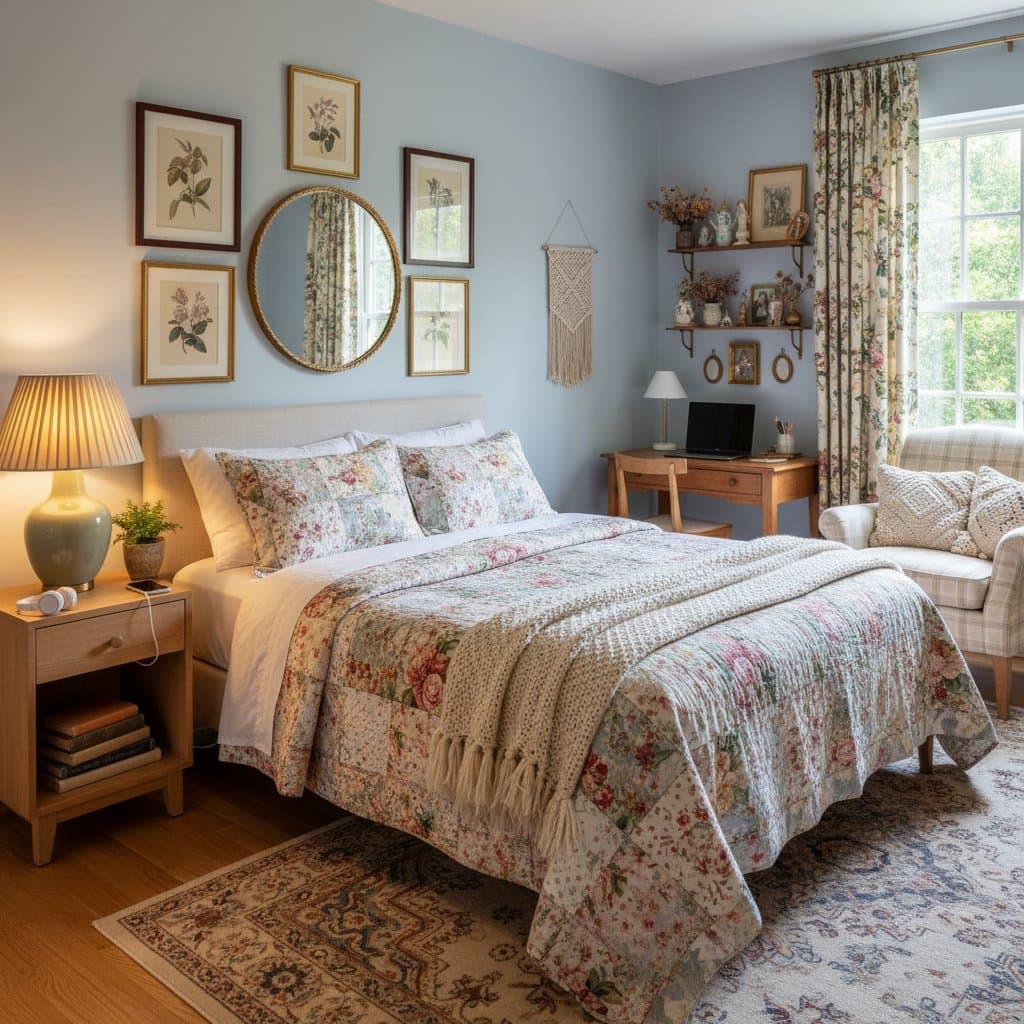
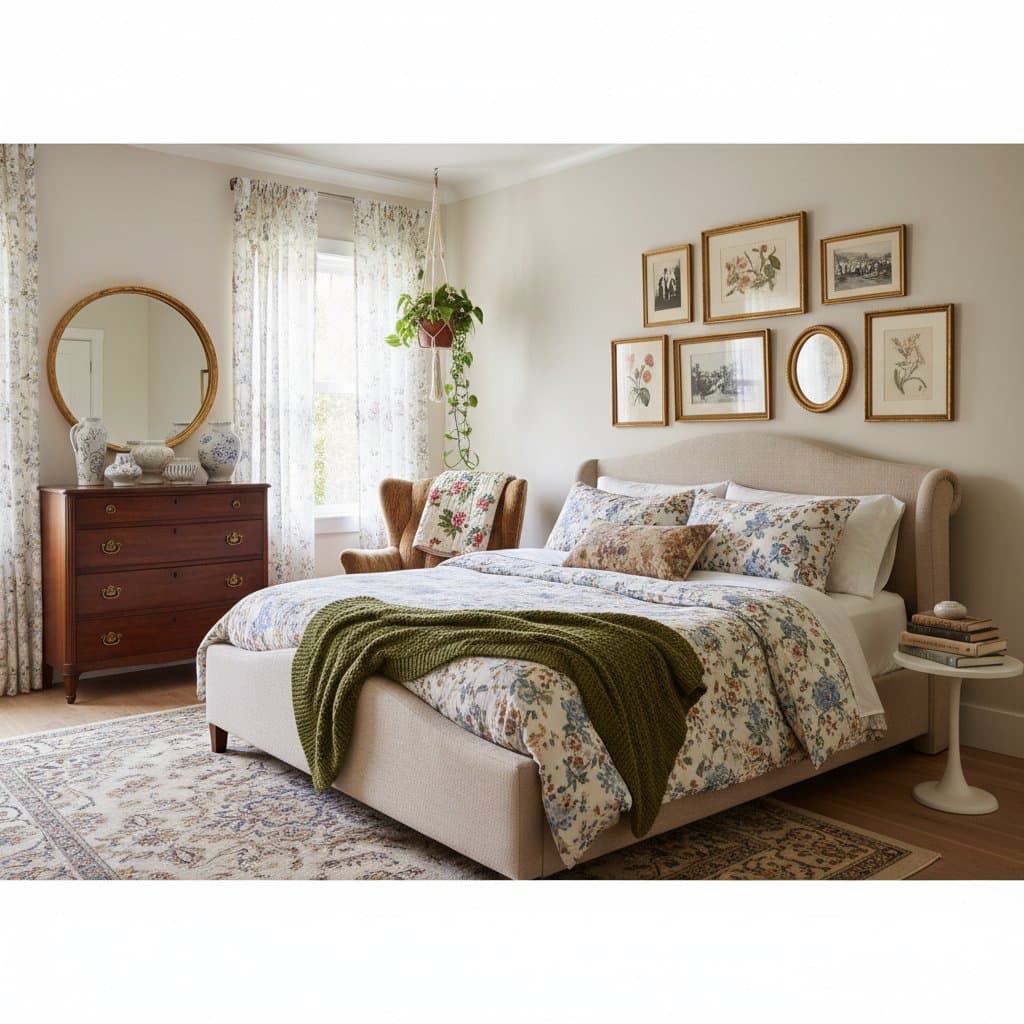
Floral motifs anchor the grandmillennial resurgence. Consider cabbage roses, intricate toile, or delicate sprigs on cotton fabrics. Gen Z designers combine these with stripes or checks, maintaining harmony through a limited palette. A duvet in dusty blue florals pairs seamlessly with a pinstriped bolster pillow. This creates purposeful cohesion rather than disorder.
Wallpaper reemerges in measured applications. An accent wall behind the bed or a subtle pattern within a closet introduces nostalgia without dominance. To implement this, select wallpapers with matte finishes to soften visual impact and ensure they complement surrounding textiles.
2. Furniture With Character
Rather than purchasing new items, young homeowners explore platforms like Facebook Marketplace, thrift shops, or family storage. They seek pieces featuring gentle curves, carved legs, and brass accents. A vintage dresser bearing subtle wear transforms into a focal point when cleaned and positioned with a contemporary mirror. This combination prevents the room from resembling a themed set.
Such selections align with core values. Restoration and repurposing promote sustainability and individuality. Every item holds a backstory, whether inherited from relatives or discovered at a flea market. Begin by assessing current furniture for refinishing potential, using mild cleaners to preserve patina.
3. Gentle Lighting Solutions
Overhead fixtures with stark illumination fade from favor. Grandmillennial bedrooms rely on layered, diffused sources for a warm ambiance. Pleated lampshades, low-wattage bulbs, and fabric-covered sconces produce a soft, enhancing light. Designers often incorporate multiple layers: a pendant for ambient illumination, a table lamp for task lighting, and candles for atmospheric depth.
This strategy elevates the bedroom beyond mere functionality. It fosters a sanctuary-like quality, blending vintage appeal with modern efficiency. Experiment with dimmer switches to adjust intensity, ensuring versatility for various activities.
4. Tactile Textiles
Texture defines the grandmillennial appeal. Ruffled pillowcases, needlepoint accents, and assorted throws introduce dimension. Materials such as cotton, linen, and velvet dominate in gentle hues like blush, sage, or cream.
The sensory aspect equals the aesthetic one. Velvet offers luxury, linen ensures breathability, and cotton provides stability. These elements combine to form a vibrant, inviting space. Source textiles from ethical suppliers to enhance the sustainable narrative.
5. Curated Art and Accessories
Grandmillennial bedrooms eschew uniform gallery arrangements in favor of eclectic groupings. A botanical illustration might neighbor a family photograph or a petite oil painting. Small items like porcelain containers or glass vials serve as subtle dresser adornments.
This arrangement represents narrative through possessions rather than disarray. Each object fosters a feeling of heritage and intention. Rotate displays seasonally to maintain freshness and personal relevance.
Gen Z's Affinity for This Aesthetic
The draw of grandmillennial decor for Gen Z extends beyond visuals to emotions. Following prolonged exposure to digital saturation and fleeting fashions, they seek stability. A ruffled cushion or embroidered shade embodies handmade quality absent in industrial products. These details evoke unhurried paces and enduring quality.
Rebellion plays a role as well. Opting for floral wallpaper amid neutral dominance asserts quiet defiance. It declares personal preference without reservation. This assuredness mirrors generational traits alongside their stylistic choices.
Integrating Grandmillennial Elements Today
Balance proves essential for grandmillennial success. Excess traditional items risk heaviness, while sparsity dilutes charm. Consider these strategies for contemporary adaptation:
- Establish Neutral Foundations. Employ creamy whites, soft taupes, or light grays as backdrops. These allow patterns and antiques to stand out effectively.
- Curate Thoughtfully. Display cherished items prominently, yet prevent surface clutter. Select a handful of significant pieces for greater impact than a crowded display.
- Merge Periods. Combine a Victorian armchair with a sleek acrylic table. The interplay of eras generates engaging contrast.
- Consider Proportions. In compact areas, opt for finer prints and airy fabrics. Bold florals or dense woods may dominate unduly.
Those mindful of budgets can initiate changes incrementally. Introduce a floral cushion or pleated shade. Incorporate framed botanicals or a secondhand quilt. The style's adaptability supports gradual development, yielding a nuanced, individualized room.
Evolving Your Bedroom Narrative
A grandmillennial bedroom develops organically. Additions like fresh floral upholstery or a discovered vintage mirror integrate over time. The objective involves ongoing refinement rather than swift completion.
Sunlight filtering through patterned drapes. The pleasure of settling into a bed of layered linens and cottons. A space that preserves recollections alongside furnishings. These qualities capture the revival's essence.
For Gen Z, this aesthetic transcends decoration. It affirms priorities of comfort, eco-consciousness, and uniqueness. It honors skilled creation over expediency and feeling over precision. Amid rapid societal shifts, such rooms encourage pause, appreciation of intricate patterns, and the subtle radiance of light on seasoned surfaces.
Reflect on incorporating grandmillennial touches: perhaps a solitary ruffled pillow or the recollection of a grandmother's quilt. Regardless, the core remains consistent. A home merits a compelling story, and this approach provides an elegant means to express it.