Recycled Glass Terrazzo: A Sustainable Kitchen Transformation
Cluttered countertops often weigh down the functionality of a kitchen. A innovative material now restores lightness to these essential spaces. Recycled glass terrazzo, previously a specialized option, emerges as the focal point of eco-friendly kitchen design. Its gentle luminescence, environmental narrative, and artisanal quality draw widespread interest. Every surface conveys a distinct tale, merging hue, texture, and intent in a manner that appears both anchored and contemporary.
This material extends beyond aesthetics to foster deeper engagement. Homeowners contribute to a circular design process by converting discarded glass into enduring elements. Such renewal aligns seamlessly with the rising emphasis on intentional living. A countertop transcends mere utility; it serves as a constant affirmation that sustainability integrates seamlessly with visual appeal, resilience, and practical daily use.
Origins in Reuse
Recycled glass terrazzo originates from commonplace sources: shattered glass with prior purposes. Bottles, jars, and fragments undergo collection, sorting, and thorough cleaning. These elements blend with a binding agent, followed by polishing and refinement into robust surfaces. The outcome balances organic essence with modern sophistication. Glass particles capture illumination, generating understated gleams that evolve with daily light shifts.
This method ensures unparalleled uniqueness in each slab. Variations in color composition and patterning prevent replication. Such distinctiveness infuses kitchens with character absent in standardized products. It encourages deliberate observation of intricacies. During routine maintenance, one might discern a pale green arc from a former vessel or a trace of amber from a container of preserves. These observations link the area to themes of repurposing and rejuvenation.
Factors Driving Its Popularity
Several attributes attract individuals to recycled glass terrazzo. Its visual depth imparts vitality. Conventional quartz or uniform surfaces appear monotonous under intense lighting. Terrazzo, however, maintains dimension through the organic variance of glass inclusions, which diffuse light variably for subtle dynamism. Kitchens gain immediacy and energy, independent of vivid palettes or extravagant configurations.
The material also addresses the surge in environmentally aware selections. Numerous residents seek options that curtail waste and bolster regional artistry. Recycled glass terrazzo fulfills these criteria effectively. By repurposing items destined for disposal sites, it promotes a restorative loop with profound significance.
Practicality further enhances its appeal. Terrazzo demonstrates strength, thermal tolerance, and straightforward upkeep through basic practices. It withstands routine culinary tasks, beverage mishaps, and hectic routines. The option conveys luxury while accommodating ordinary demands.
Customization and Adaptability
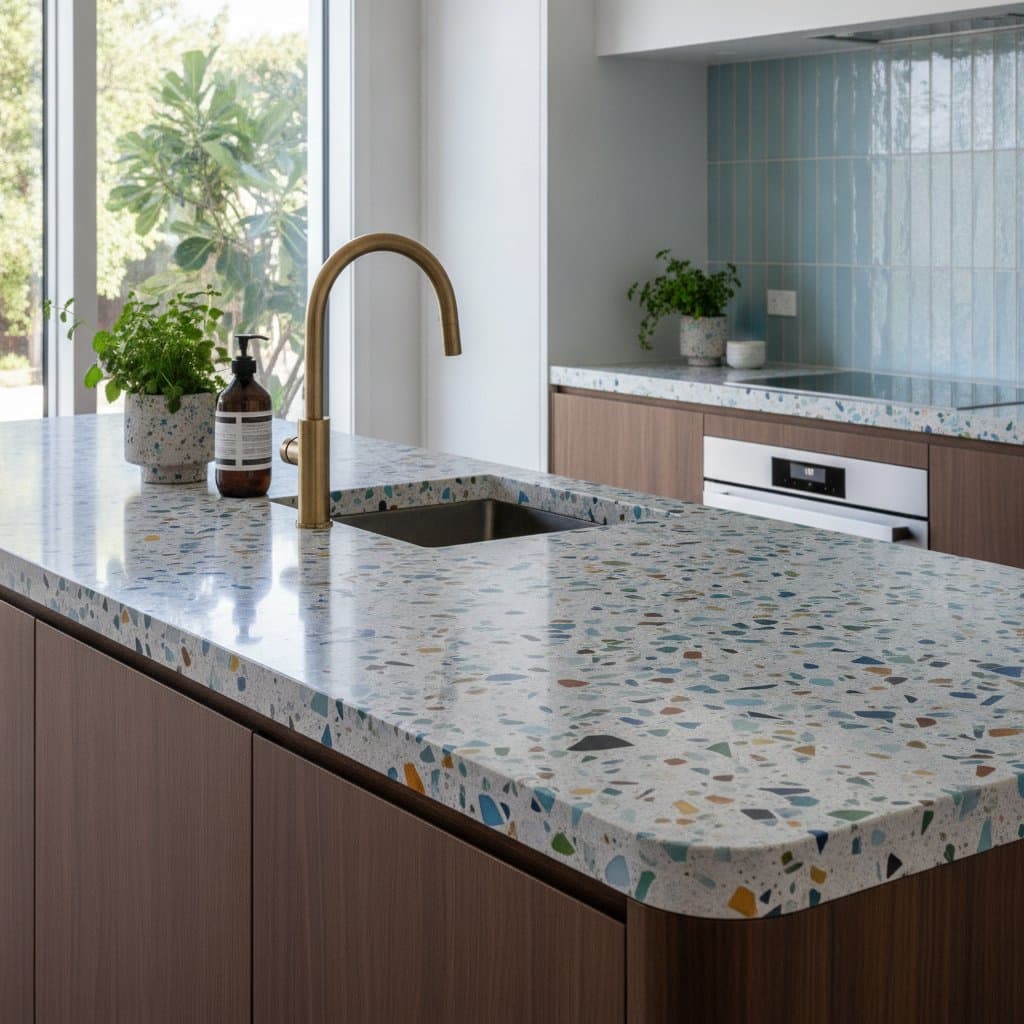
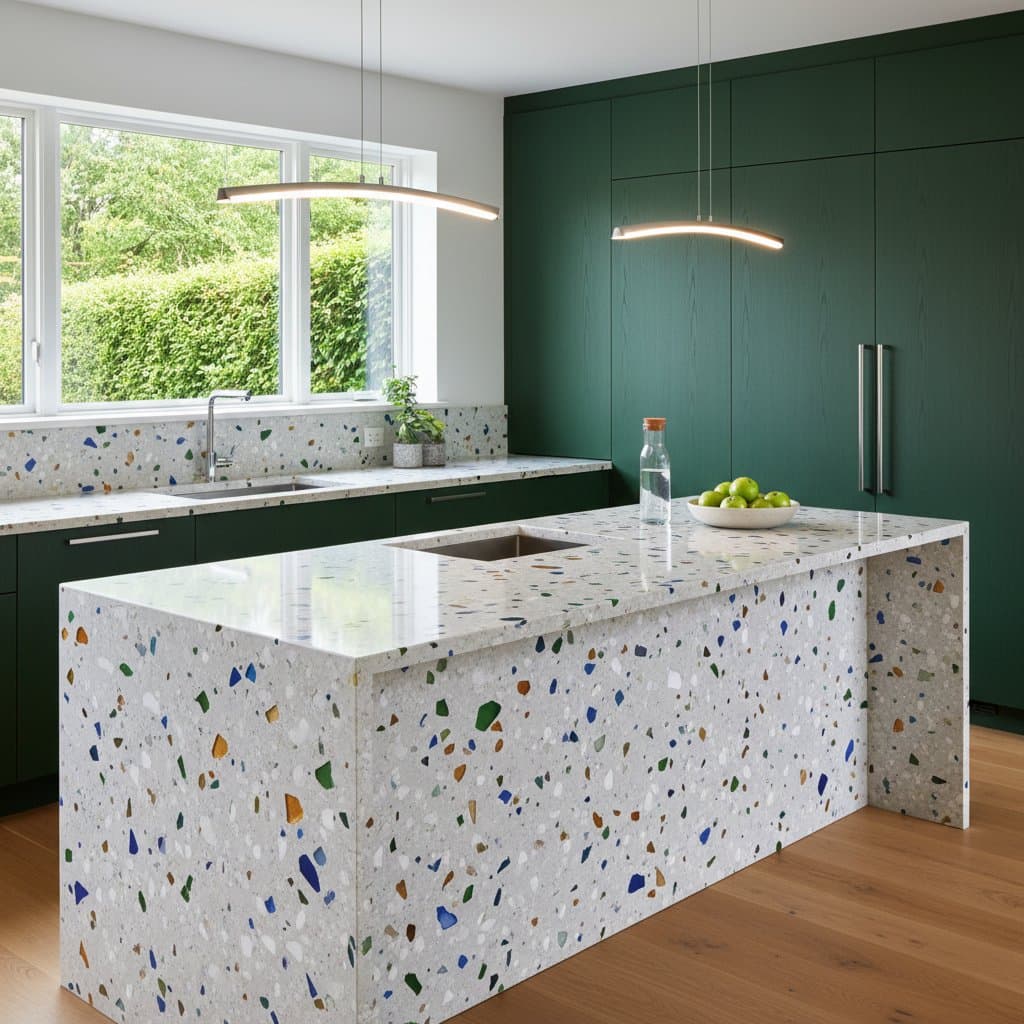
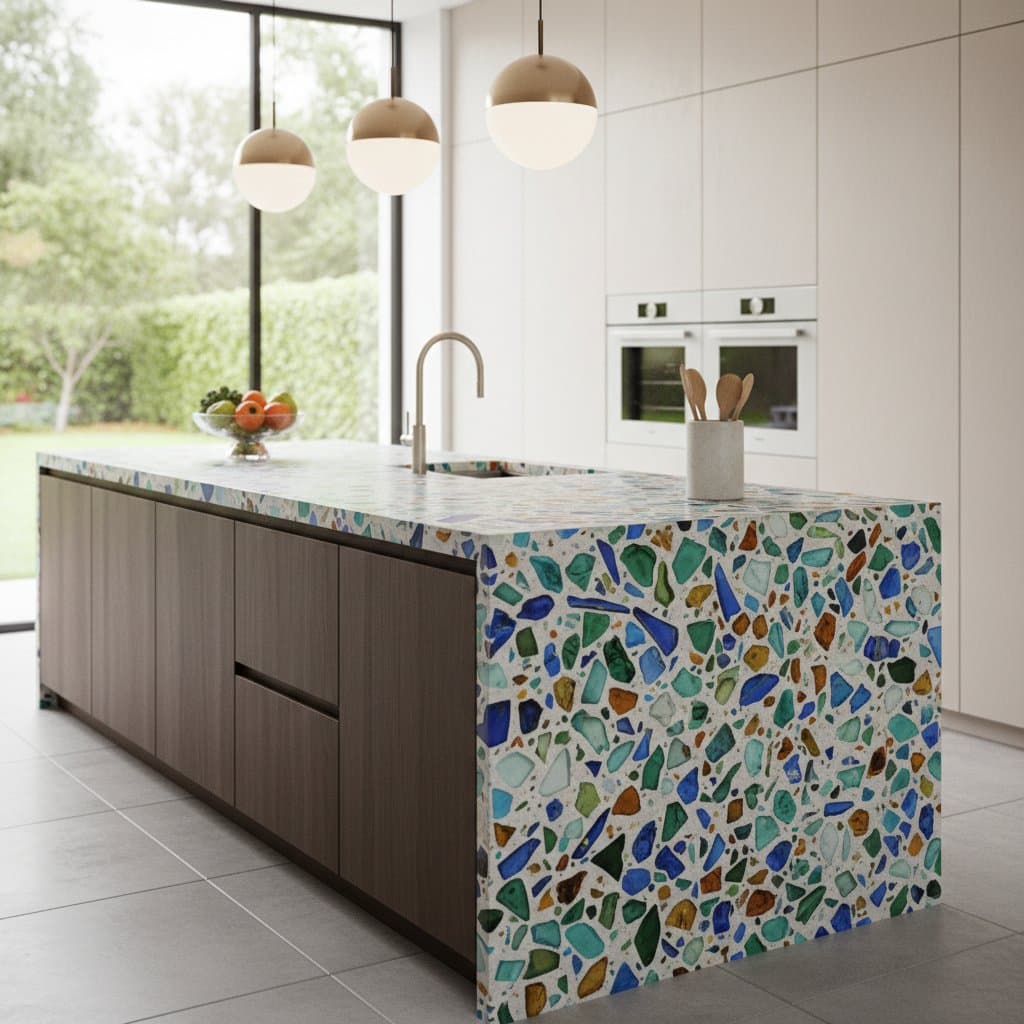
Terrazzo's allure partly stems from selecting appropriate color and texture combinations. Preferences range from subdued neutrals reminiscent of beach glass, incorporating whites, beiges, and subtle azures, to vibrant assortments featuring navy, emerald, or rich golden shades. Designers adjust glass granule dimensions as well. Coarser aggregates yield a tiled appearance, whereas finer ones deliver a seamless, understated glow.
This flexibility suits diverse kitchen aesthetics. It tempers ultramodern environments or illuminates quaint rural settings. Compatibility extends to timber, polished metals, or coated storage units. Versatility applies equally to worktops, splash guards, or central preparations areas.
Artisanal Production Process
Distinct from automated counterparts, terrazzo frequently involves manual expertise. Proficient artisans pour, refine, and complete each panel personally. This approach imparts a sensory genuineness valued by many residents. The result combines polish with historical grounding.
Personalization opportunities arise through this hands-on method. Selections encompass hue mixtures, particle scale, and gloss intensity. Residents occasionally commission bespoke formulations from personal recyclables, like vessels from gatherings or amassed tinted shards. The resultant surface evolves into a cherished memento beyond functional design.
Maintenance Essentials
Terrazzo combines elegance with pragmatism. It endures regular handling effectively, yet benefits from considerate upkeep to sustain its sheen and safeguard its coating.
Implement these straightforward practices for enduring vibrancy:
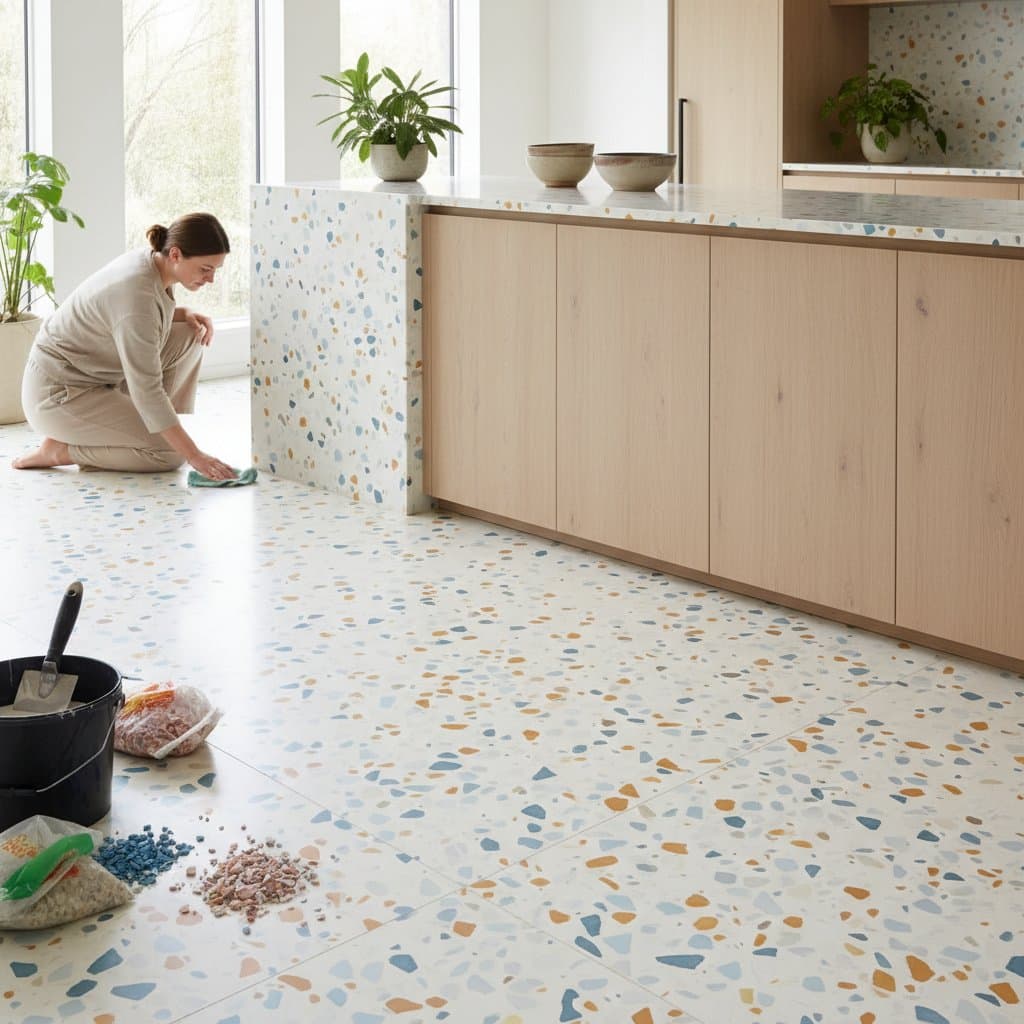
- Clean daily using a gentle fabric and diluted detergent. Steer clear of aggressive agents or rough tools that might diminish luster.
- Employ chopping surfaces and heat guards. These measures preserve both the material and cutting implements.
- Address spills without delay. The sealed finish repels discoloration, though prompt attention averts buildup.
- Apply periodic resealing as needed. Certain finishes gain from occasional light applications to retain brilliance.
- Accept inherent variations. Gradual development of a soft sheen contributes to character and richness over time.
These routines preserve terrazzo's appeal without requiring flawless execution. The intent focuses on harmonious coexistence rather than constant vigilance. A utilized surface narrates tales of communal dining, raw provisions, and routine existence.
Environmental Foundations
Recycled glass terrazzo distinguishes itself through inherent ecological soundness. Production commences with surplus glass otherwise overlooked. Manufacturing demands lower energy than fabricating fresh glass, and numerous suppliers source nearby to curb transit emissions.
Adhesives advance toward greener alternatives. Certain fabricators employ minimal-emission or binder-free compounds to lessen ecological footprint. Additions like pulverized ceramics, marine shells, or salvaged minerals augment tactility and eco-profile. These developments illustrate the synergy between aesthetics and planetary stewardship.
Opting for recycled glass terrazzo conveys a subtle yet impactful declaration. It affirms that allure and ecological mindfulness harmonize within routine settings. This ethos profoundly connects with those seeking residences that embody attentiveness and ethics.
Selecting an Ideal Aesthetic
Choosing terrazzo for a kitchen proves rewarding. Initiate by evaluating ambiance and utility. Consider the desired atmosphere: serene and open, or dynamic and invigorating? Allow this vision to direct palette decisions.
- For tranquil spaces: Select refined terrazzo in ivory, taupe, or muted silver shades. These integrate smoothly with organic timber and heated alloys.
- For dynamic areas: Experiment with substantial glass in vivid indigos, viridians, or assorted vibrants. Such motifs generate momentum and dominate visually.
- For enduring designs: Merge neutral foundations with restrained accents of reused glass for equilibrium and longevity.
Obtain physical examples prior to commitment. Position them atop existing surfaces under varying illuminations to observe diurnal transformations. Light interplay constitutes terrazzo's inherent allure, and firsthand assessment in situ fosters assured selection.
Implementation Considerations
Terrazzo installation demands professional intervention, not independent efforts. Panels require expert crafting and meticulous placement due to their mass and the necessity for uniform refinement. Engage specialists versed in terrazzo or analogous composites. Review portfolios of prior installations and confirm proficiency in sealing and concluding processes.
In preparation, evaluate these aspects:
- Edge configurations: Curved borders mitigate fractures and add gentleness. Linear borders yield sharp, contemporary lines.
- Depth: Conventional thickness suffices for standard applications, while augmented profiles emphasize focal elements like preparation hubs.
- Splash areas: Coordinated panels establish seamless continuity, whereas divergent substances provide delineation.
Deliberate attention to these elements guarantees a unified and purposeful outcome.
Building an Emotional Bond
Materials derived from recyclables evoke a subtle sentimentality. They illustrate that elegance arises from the forsaken. In kitchens, this resonance holds particular potency. As the home's core, kitchens facilitate sustenance and bonds daily. A surface embodying revival complements this essence naturally.
When dawn rays illuminate the inclusions, it evokes a modest tribute to ingenuity and imagination. The element acts as a perpetual cue that sustainability involves recognizing worth in the present, not forfeiture. This viewpoint shapes approaches to culinary preparation, procurement, and waste management elsewhere.
Complementary Material Pairings
Recycled glass terrazzo integrates gracefully with diverse kitchen elements. Its dimensional hues and tactility enhance both organic and synthetic finishes. Consider these combinations:
- Subdued timber enclosures for equilibrium and coziness.
- Textured alloy accessories to accentuate its luminous quality.
- Earthenware in gentle shades to underscore artisanal traits.
- Polished aggregate bases for a sleek, stable vibe.
- Fabric accents like canvas or plant fibers that mirror its innate quality.
Such integrations foster cohesion between sensory and sophisticated aspects. They demonstrate that eco-design need not appear stark; it permits layering, ease, and individuality.
Addressing Typical Hesitations
Concerns about fragility or discoloration arise among some prospects. In reality, proper maintenance yields exceptional performance. Glass embeds within a sturdy matrix form a compact, tough barrier. Superficial abrasions frequently polish away, and substantial impairments yield to expert restoration. Unlike porous stones, sealed terrazzo defies infiltration from beverages, vintages, or lipids.
Expense represents another consideration. Pricing aligns with premium quartz or granites. Durability and singularity position it as a worthwhile expenditure. Infrequent need for renewal often results in superior long-term value compared to fragile alternatives.
Extending the Impact
Selecting recycled glass terrazzo constitutes one choice within a broader ethos of thoughtful habitation. It mirrors aspirations for residences that satisfy visually and experientially. Interactions during meal assembly or beverage placement engage a medium of restoration and regard.
This philosophy permeates additional selections: salvaged lumber displays, reused alloy fittings, and botanical weaves. Together, they cultivate environments that nurture and account for consequences.