Wabi-Sabi Textures Redefine Japandi Bedroom Style
Imagine stepping into a bedroom after a demanding day. The soft grain of pale oak meets your feet, while linen drapes provide a cool yet comforting touch. A calm hush envelops the space. This scene captures the quiet magic of Japandi style infused with Wabi-Sabi imperfection, redefining how bedrooms feel, look, and function.
Readers drawn to Scandinavian minimalism often seek the soulful irregularity of Japanese design. Japandi already blends these elements effectively. Wabi-Sabi textures add fresh vitality, introducing warmth to restraint and transforming minimalist spaces into emotionally grounded, tactile retreats.
The Opportunity for Meaningful Texture
Homeowners appreciate Japandi for clean lines and gentle palettes. Yet rooms sometimes appear controlled or sterile. Wabi-Sabi addresses this by celebrating imperfection, the marks of time, and handmade qualities. Introducing these elements creates a transformative shift: the space feels lived in rather than staged, emphasizing experience over mere decoration.
Textured layers build depth without clutter. Neutral tones and open layouts remain intact. Natural textures alter the mood profoundly, fostering tactile connection and emotional resonance beyond visual appeal.
Understanding Wabi-Sabi within Japandi
Wabi-Sabi centers on acceptance and authenticity, honoring materials that reveal their history. A linen duvet with subtle wrinkles, a clay vase showing faint crackle, or an aged wooden beam represent features, not flaws. Within Japandi, this philosophy softens modern minimalism's sharp edges.
Japandi values craftsmanship and simplicity. Wabi-Sabi adds humility and intimacy. The outcome is a serene yet soulful bedroom, polished yet deeply personal.
Key Textures That Bring the Look to Life
Texture serves as the quiet storyteller in a Wabi-Sabi-inspired Japandi bedroom, conveying authenticity through surface and touch. Select materials that enhance serenity and invite interaction.
-
Natural Wood Grain
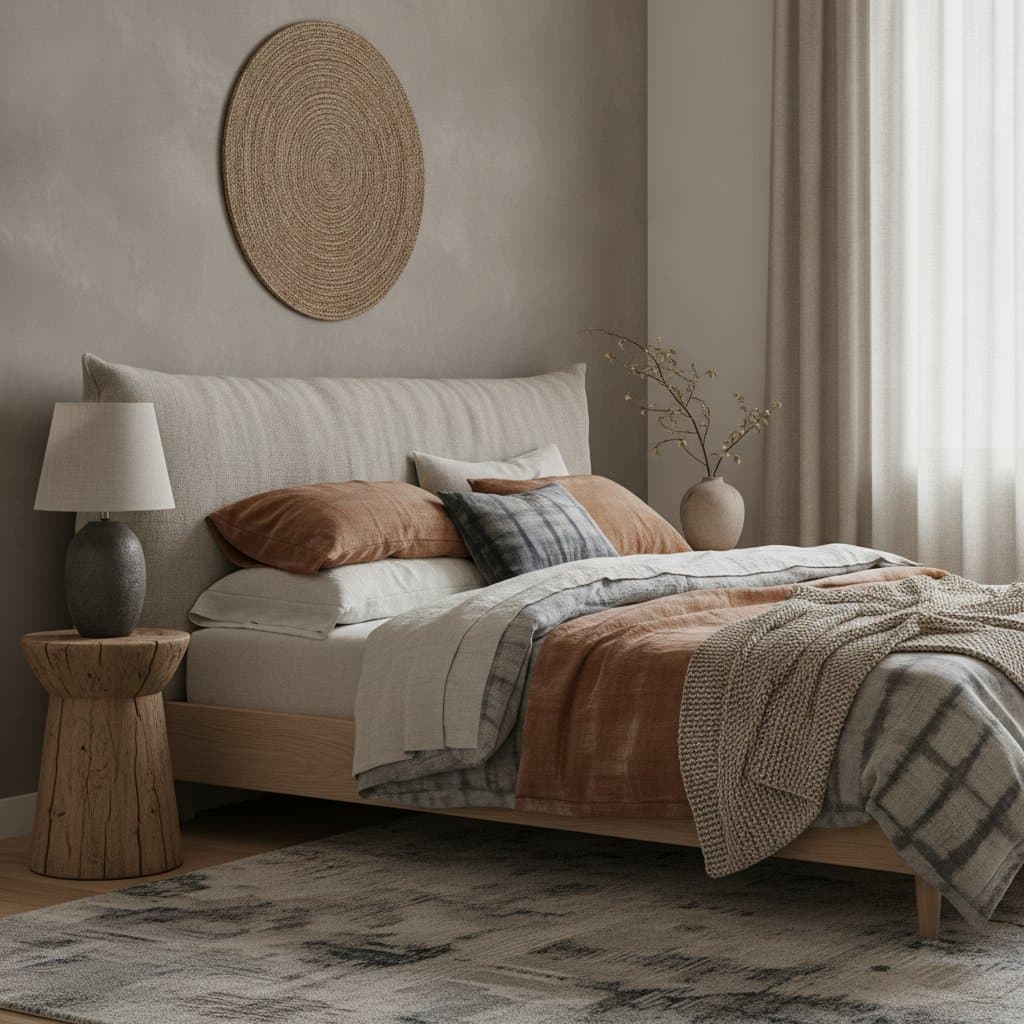
Opt for oak, ash, or walnut with finishes that highlight variation. Skip heavy lacquers to preserve knots and tone shifts. These irregularities infuse organic warmth into Japandi furniture's clean geometry. For instance, a bedside table with visible grain draws the eye and hand naturally. -
Raw Linen and Cotton
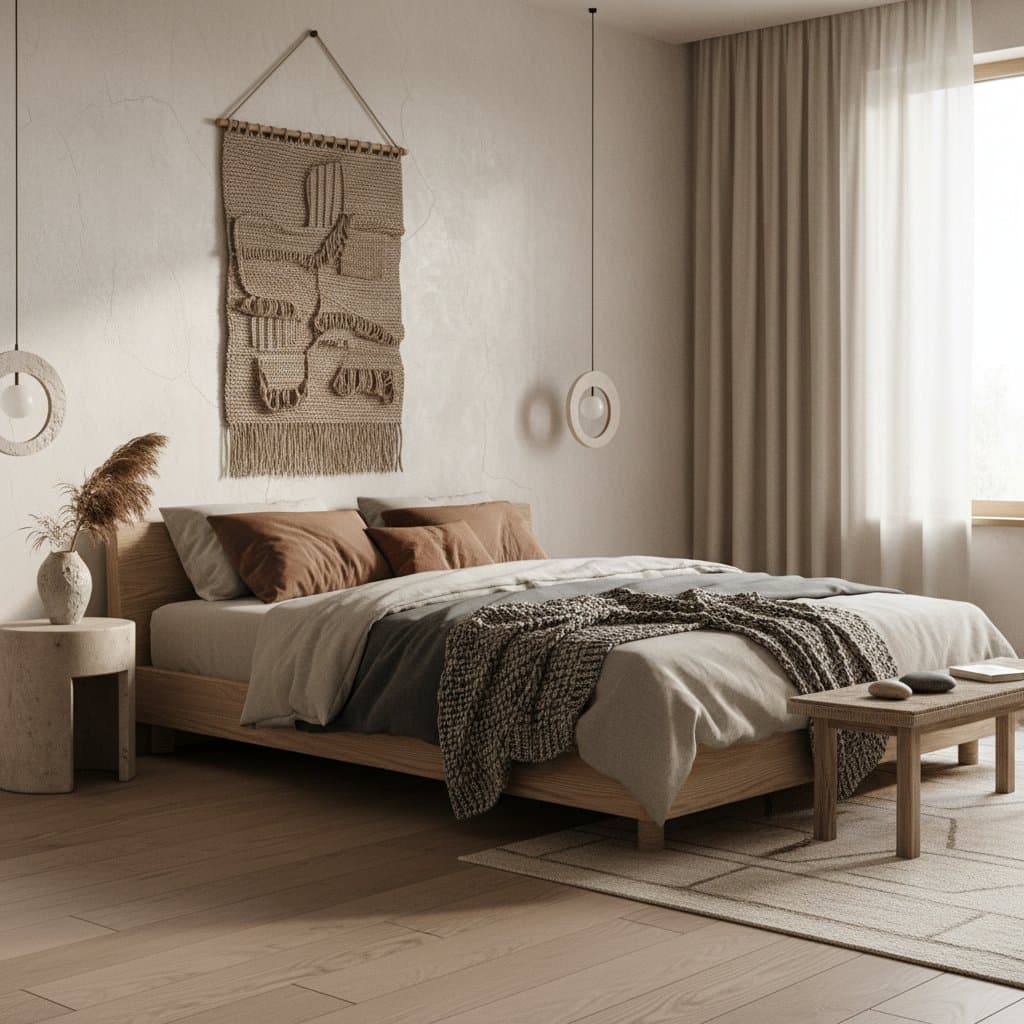
Favor relaxed textiles over crisp ones. Choose washed linen sheets, nubby throws, and cotton gauze curtains for softness in minimal spaces. Gentle folds produce shifting shadows and light, evolving with the day's rhythm. -
Clay and Ceramic Accents
Incorporate handmade ceramics like a bedside lamp base or jewelry bowl. Uneven glazes and subtle imperfections anchor the room. Each piece connects users to its artisan origins, adding unique character. -
Stone and Plaster Surfaces
Use textured plaster walls or matte stone tiles instead of glossy options. Their subtle roughness adds depth and diffuses light calmly. A single plastered accent wall can elevate a compact bedroom's atmosphere. -
Woven and Organic Fibers
Select jute rugs, rattan lamps, and bamboo blinds to echo nature. Fibrous patterns and irregular weaves introduce quiet rhythm. These elements balance the sleek lines of Nordic-inspired pieces.
Balancing Texture and Minimalism
Mastery of Wabi-Sabi Japandi requires restraint. Each texture must serve a purpose, avoiding unnecessary accumulation. Create contrast for interest: pair a smooth wall with raw linen drapery or a sleek black lamp against unfinished wood. This preserves overall calm.
Maintain a soft color palette of sand, clay, oat, gray, and muted black. Subtle material differences take center stage, steering clear of bold patterns or vibrant hues.
Incorporate warm, diffused lighting such as paper lanterns, soft-glow sconces, or candles. These choices amplify tranquility and highlight textures gently.
Practical Considerations for Your Project
Create a Wabi-Sabi Japandi bedroom across various budgets by prioritizing intention in selections.
-
Budget-Friendly Updates
Begin modestly by swapping synthetic fabrics for natural alternatives. Source handmade pottery from local artisans or online marketplaces. A textured throw or linen bedspread alone can refresh the atmosphere significantly. -
Mid-Range Enhancements
Apply limewash paint or clay plaster to walls for added depth and softness. Exchange mass-produced art for framed textiles, pressed botanicals, or simple ink drawings embracing subtle imperfection. -
Premium Transformations
For comprehensive changes, commission custom woodwork from sustainable timber. Install built-in shelving showcasing visible joinery. Engage local craftspeople for bespoke items like a headboard or sliding screen that highlight skilled workmanship.
Permits seldom apply unless modifying electrical or structural components. Consult local building authorities for substantial alterations. Select contractors experienced in natural finishes and traditional methods to ensure quality results.
Climate and Material Care
Local climate influences the Wabi-Sabi aesthetic's longevity. In humid areas, untreated wood and linen absorb moisture readily. Protect surfaces with natural wax or oil finishes to retain texture while preventing damage.
In arid regions, condition wood regularly to avoid cracking. Employ humidifiers to maintain textile suppleness. Aim for graceful aging over rapid deterioration, preserving the philosophy's essence.
Bringing the Philosophy to Daily Life
Wabi-Sabi extends beyond design trends into a lived mindset. It promotes slowing down, valuing handmade elements, and finding calm in imperfection. A Japandi bedroom enriched by this approach evolves into a reflective sanctuary.
Start mornings observing light across a textured wall or the cool feel of linen sheets. Evenings offer solace in a bedside table's irregular grain or a candle's flicker in a hand-thrown holder. These sensory details affirm that beauty thrives in authenticity.
How to Begin Your Redesign
Embark on redesign by observing existing elements. Identify cold or overly polished surfaces needing warmth. Outline priorities based on these insights.
-
Declutter with Purpose
Eliminate unnecessary items while retaining those with personal significance. Wabi-Sabi prioritizes sentiment over ostentation. -
Layer Gradually
Introduce textures sequentially to sustain balance and prevent overload. -
Engage Local Makers
Connect with nearby ceramicists, carpenters, or textile artists. Their creations embody the authenticity absent in mass production. -
Reflect and Adjust
Allow time with each addition. True harmony in Japandi Wabi-Sabi emerges gradually.
Living with Imperfection as a Form of Calm
In a perfection-driven world, a Wabi-Sabi Japandi bedroom offers quiet resistance. A mug's chipped edge, a linen pillow's soft indentation, or a plastered wall's uneven brushstroke serve as intentional reminders. Life and design gain richness from traces of time and human touch.
Embracing these textures elevates minimalist beauty into a humane sanctuary. Transform your space through thoughtful additions, fostering understated warmth and authentic serenity one texture at a time.