Japandi: Blending Zen Minimalism and Scandi Warmth for 2025 Bedrooms
In an era of perpetual distractions and accumulated possessions, serene bedrooms emerge as a subtle act of resistance. Japandi design, which harmonizes Japanese minimalism with Scandinavian coziness, gains prominence among individuals seeking equilibrium in their living spaces. This approach prioritizes presence over flawlessness, encouraging a deliberate pace, deeper breaths, and environments that feel anchored yet vibrant.
The Core Principles of Japandi
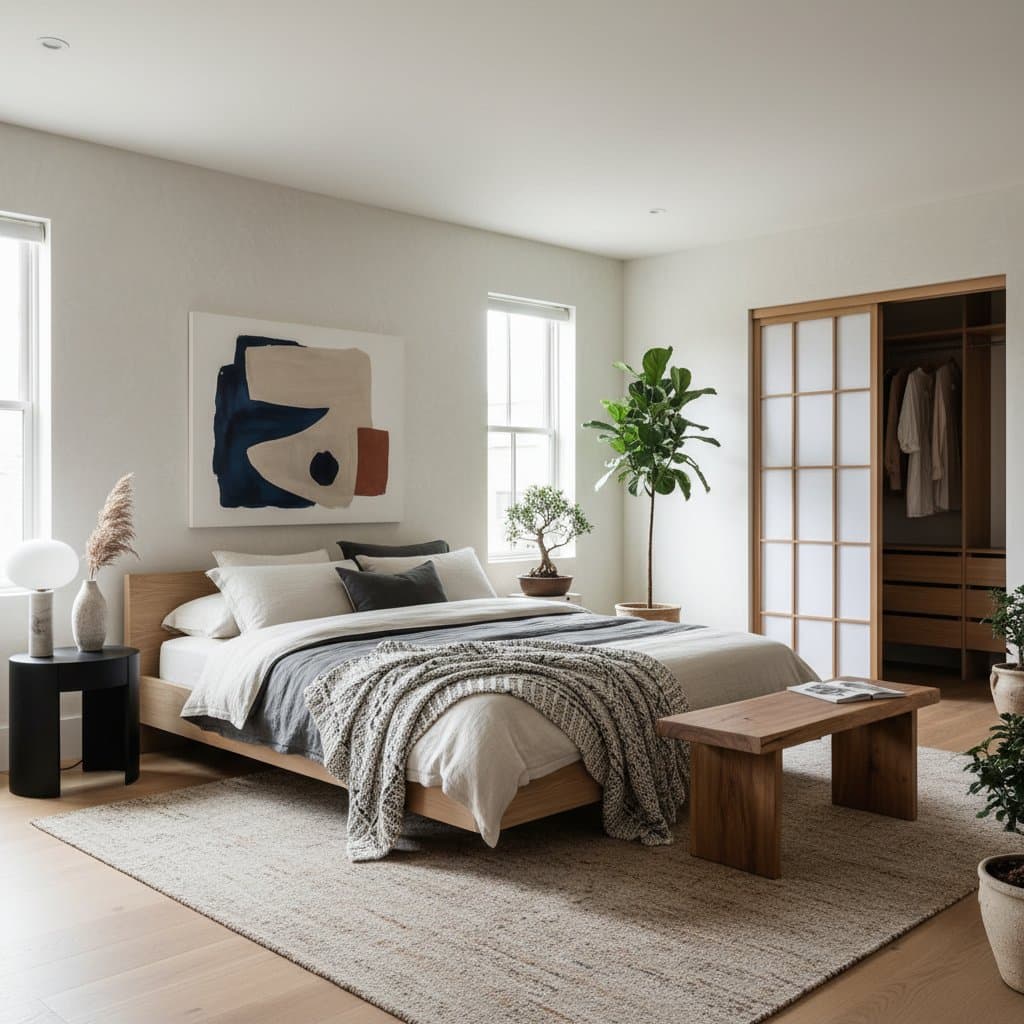
Japandi integrates the precise lines and utility of Scandinavian design with the contemplative restraint of Japanese traditions. Both philosophies honor skilled workmanship, organic substances, and a soothing ambiance. Within a bedroom setting, this synthesis cultivates an ambiance conducive to repose and contemplation.
Scandinavian elements highlight illumination, tactile qualities, and ease. Japanese influences stress concordance, void, and the allure of imperfection. Combined, they articulate a narrative of subdued moderation and authentic elegance. A Japandi bedroom conveys warmth without congestion, simplicity with profound individuality.
Essential Components of Japandi Style
To incorporate Japandi into a bedroom, emphasize substances, atmosphere, and intentional minimalism. Consider these foundational aspects for a cohesive transformation.
-
Organic Substances
Select timber, flax, cotton, bamboo, and earthenware. These choices develop patina gracefully and encourage sensory interaction. Pair pale oak, ash, or walnut furnishings with interlaced containers and earthenware luminaires to enhance natural resonance. -
Harmonized Color Scheme
Opt for gentle, terrestrial hues such as beige, slate, ivory, neutral gray, or softened verdure. Introduce depth through ebony or rich umber highlights. This restrained spectrum soothes the gaze and unifies the composition. -
Minimalist Silhouettes
Choose practical, ground-level furnishings. A basic platform frame, compact nightstand, and wall-mounted ledges maintain openness. Steer clear of cumbersome items that disrupt circulation. -
Tactile Depth Without Excess
Forego ornate decorations in favor of layered textures. Employ flax linens, woolen coverings, or fiber rugs. Such elements infuse warmth through touch, avoiding optical overload. -
Gentle Illumination
Illumination defines the mood. Employ rice-paper diffusers, fabric screens, or indirect sources for a subdued radiance. Warm-toned rays amplify tranquility and accentuate timber's inherent warmth.
The Philosophy Underpinning Japandi
Japandi transcends mere furnishing; it represents a deliberate approach to habitation that reveres spatial integrity. This perspective underscores that omissions hold equal significance to inclusions. By eliminating surplus, one cultivates mental acuity.
In a Japandi bedroom, every item justifies its position. Place a solitary stem in a vessel. Position a volume beside the resting area. Drape a coverlet at the foot. These understated features carry subtle import, fostering a sharper awakening each morning.
Implementing Japandi Gradually
For a bedroom burdened by disarray or agitation, adopt Japandi tenets incrementally to ease the transition.
- Initiate with Purging. Eliminate disused articles, retaining solely cherished or essential pieces. This foundational step alters the room's vitality.
- Refine the Sleeping Area. Select impartial linens with select strata. Pristine fabrics paired with a plush overlay elevate repose.
- Incorporate a Single Organic Element. Introduce a timber perch or flax drapery to temper the surroundings promptly.
- Infuse Natural Vitality. Position a containerized flora, desiccated stems, or a lone frond to link indoors with exterior realms.
- Curate Ornamentation. Preserve voids on planes. Ample negative space permits the area to respire.
Dedicate 10 to 20 minutes to one adjustment presently. Incremental modifications, sustained consistently, yield enduring serenity.
The Timeliness of This Fusion
Contemporary seekers desire havens that sustain rather than inundate. Japandi fulfills this aspiration through poised reserve and innate affability. It eschews fleeting fashions in favor of perennial solace. The amalgamation of Zen and Scandinavian tenets proves particularly apt for bedrooms, sanctuaries of renewal.
Japanese contributions instill regard for flaw and unadorned grace. Scandinavian inputs provide ease via tactile layers, luminosity, and habitability. United, they establish a cadence that resonates as both tranquil and relatable.
Sustaining and Extending Japandi Harmony
As the Japandi bedroom attains equilibrium, observe its influence on well-being. The environment often registers as hushed, lucid, and revitalizing. Dawn illumination appears milder, while nocturnal hours grow more soothing.
Maintain poise through routine care. Align coverings precisely. Clean planes meticulously. Release possessions that cease to contribute. Such thoughtful rituals safeguard the serenity achieved.
Extend this ethos beyond the bedroom. The cultivated forbearance and perspicuity may permeate additional areas. Japandi constitutes not merely a stylistic merger but a pathway to inner composure amid one's habitat.